Horror movies are scarier when we can relate them to our own life in some way. That's why so many are set in familiar places, like suburban houses and forests, and hardly any are set on biplanes or in Amish communities. The terror comes from sensing that the world you think you know is full of secret danger. Jaws might make you fear the ocean; Alive might make you dread getting on a plane. But would watching these movies in those exact locations heighten the experience?
To test that, we decided to watch some horror movies in the locations they're set. Here's what we found:
Frozen (the horror movie about ski lifts, not the Disney one) on a ski lift
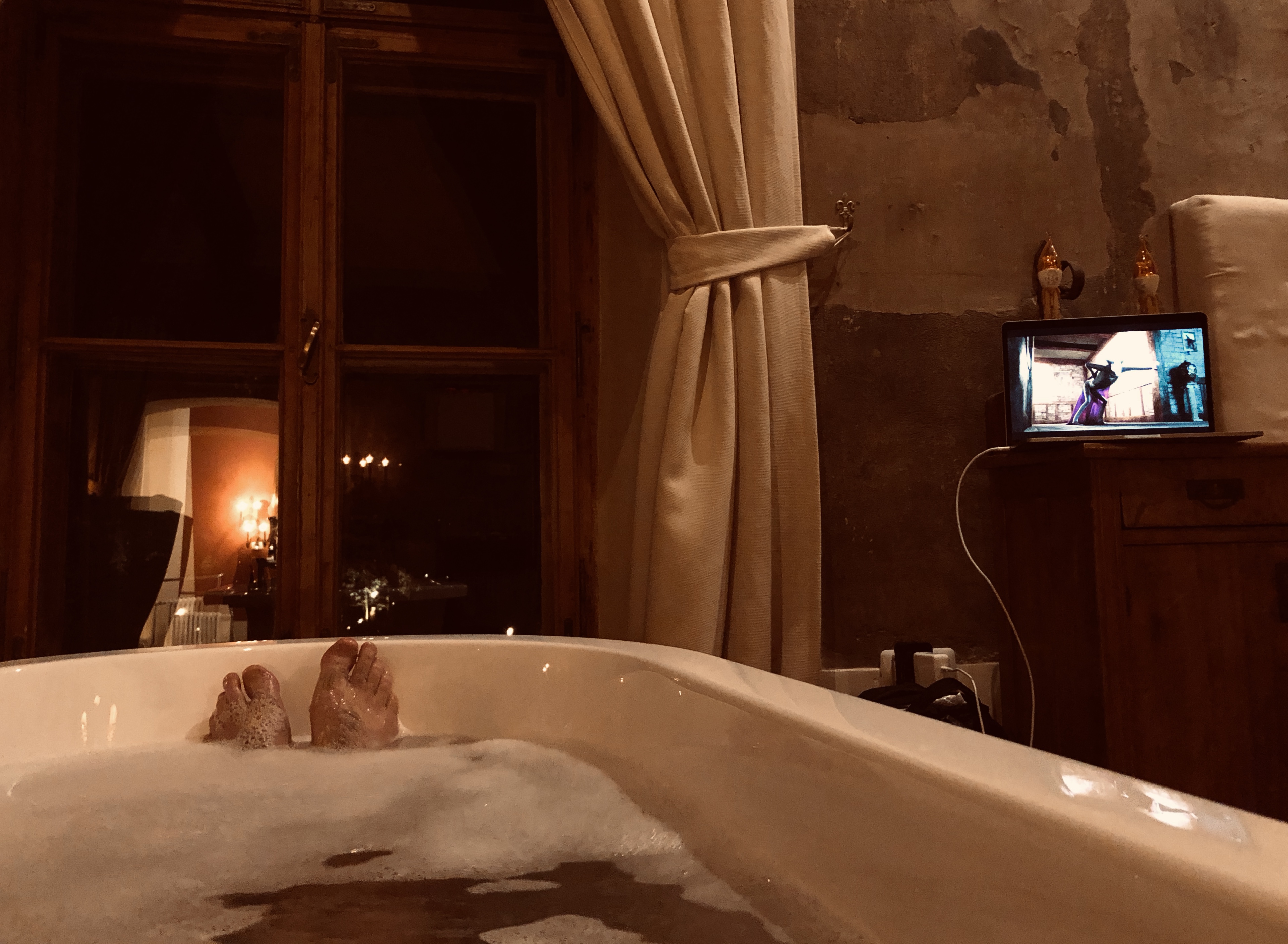
One of these films is clearly not like the others, but as I just happened to be traveling in Romania when asked to do this piece, there was no way I was going to squander the opportunity. Nestled in the breathtaking Carpathian mountains, the bright, charming Zabola Estate is a far more inviting Transylvanian hotel than the gothic, monster-filled titular one from Genndy Tartakovsky’s 2012 animated feature, Hotel Transylvania. My room for the night was a luxurious villa apartment built around 1900 to host Romanian VIPs only to fall into disrepair during the communist regime, before being renovated recently as a destination resort. If I was to wring an ounce of spookiness from a PG-rated kids comedy starring a vampire who never bites anyone, the creaky herringbone wood floors and fake candles on wrought-iron sconces of Zabola seemed a far better ambiance for it than anything I’d find at a Transylvanian Hilton.
I dimmed the lights, opened the door to the terrace (so that Dracula could fly in while I watched if he wanted to), pressed play on my laptop, and climbed into the warm claw-footed bath I’d drawn for myself in the center of the room.
Despite these efforts to set the mood, the film failed to tease any shrieks or jumps from me. In fact, the scariest thing to come of the whole ordeal was my pruned body when I emerged from my 90 minute bath like the old woman in The Shining. Gorgeous movie, though, and possibly the most tolerable one to star both Adam Sandler and Kevin James.
-Justin Caffier
Sign up for our newsletter to get the best of VICE delivered to your inbox daily.
from VICE US https://ift.tt/2P1klri
Comments
Post a Comment