This article originally appeared on VICE Canada.
We’ve all been told that millennials and Gen-Zers are completely different. Millennials, roughly born between 1981 and 1996, and Gen-Zers, obviously born after that, are constantly analyzed for their apparent differences because of factors like technology, social media, and world events. And as someone who was born very close to that millennial cut off, I often wonder where I actually stand on the generational scale.
There’s an unspoken rule for older generations to hate on those who come after them (I’m looking at you, boomers), but as much as I want to shit on Gen-Z, I’m not sure that the two-year age gap separating us can account for much.
I mean, there are tiny differences like how they catch on to new technology a bit faster, look about ten times better than I did in high school, and seemingly all have more Instagram followers than the rest of the world—but, are they inherently cooler or smarter than us? Will their understanding of social media and smartphones make them better or worse off than millennials; i.e., their poor, house-less, and deeply-fucked elders? I decided to look into it by immersing myself in Gen-Z culture—and of course, that meant Instagram. Enter: thread accounts.
Essentially, thread accounts are the lovechild of Ask Reddit and Tumblr. Living on Instagram (and originating from Twitter), it’s where teens provide advice on run-of-the-mill topics, like how to lose weight, things to talk about on a date, or what it’s like to lose your virginity. They’re called thread accounts because the posts are screenshots of Twitter threads that teens have written themselves.
This mimics the commentaries once found in the J-14s and Tiger Beats of older generations, but without the credible sources, fact-checking, and often spell-checking at times... so not exactly foolproof.
But because I’m mildly obsessed with the niche cavities of social media, and because part of me still wishes I could’ve been cool in high school, I decided that I’m going to follow as many Instagram threads in a week that I can.
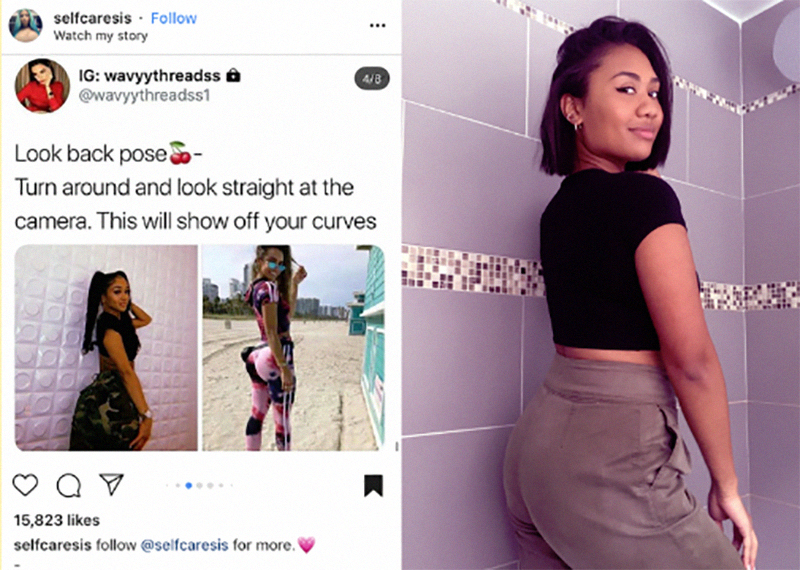
After I see the photos, I think I look foolish and never want to make those poses ever again—but ultimately, I got the results I wanted, despite not actually posting them to Instagram ‘cause #offbrand.
Looking back on this week, I come to the seemingly opposing conclusions that Gen-Z is both obsessed with appearances and way more put together than humanly possible. It’s tiring and unrealistic, but it didn’t exactly stray far from the corny-ass advice I sought when I was a teenager. For now, I’ll just make fun of Gen-Zers for the fact that they’re putting avocado in their hair and not on their toast.
Sign up for our newsletter to get the best of VICE delivered to your inbox daily.
Follow Ebony-Renee Baker on Twitter.
from VICE https://ift.tt/2DG7qEN
Comments
Post a Comment