This article originally appeared on VICE Austria.
An elderly neighbor of mine recently gave me some life-changing advice. In an alleyway near our building, representatives from three different political campaign groups have set up camp, and every morning they cling to anyone who passes them by, like those suckerfish who won't leave whales alone. Since I find it hard to deal with that kind of thing—especially early in the morning—I asked my neighbor, Mr. Rupp, how he deals with our unwelcome guests.
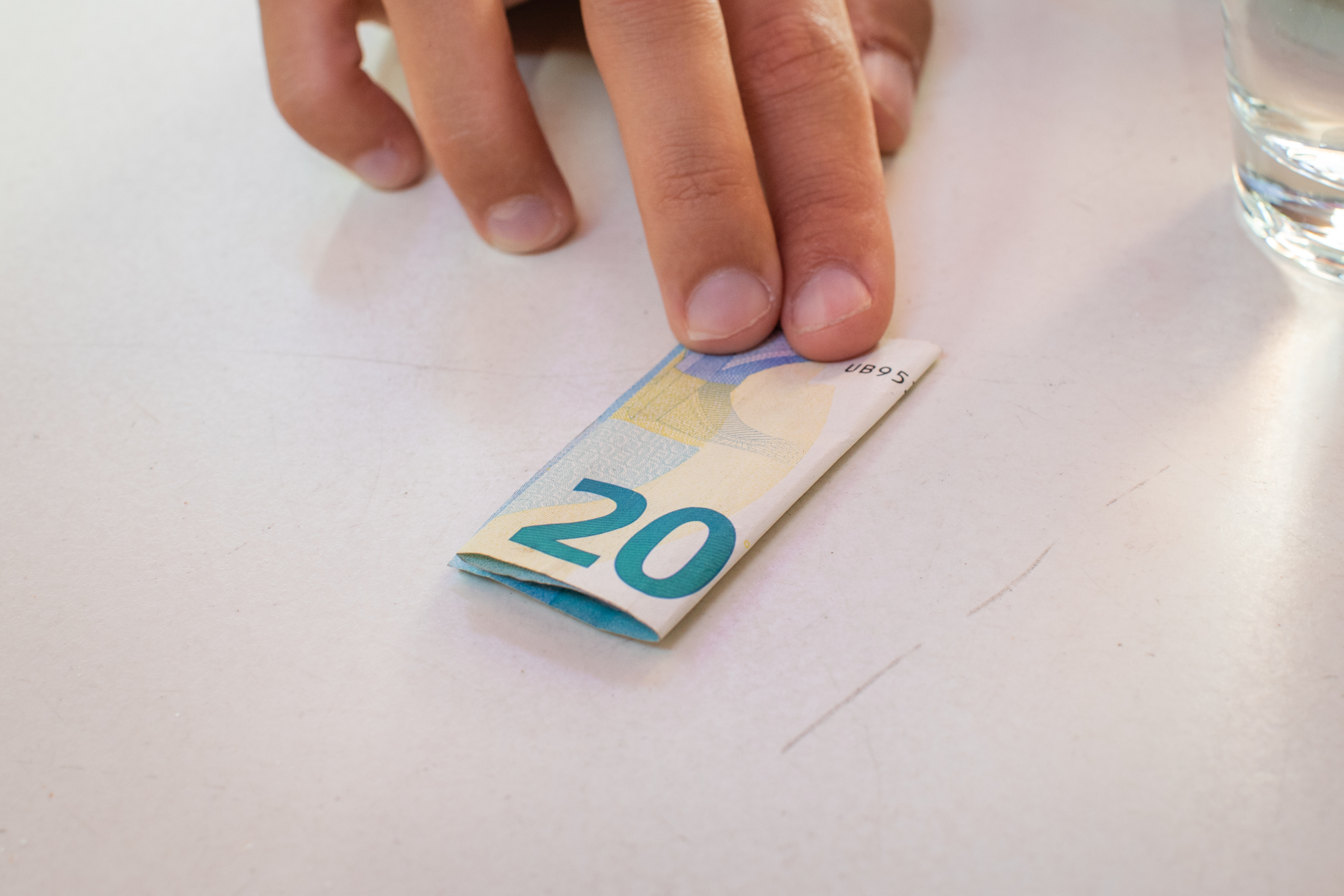
"It's simple," he barked at me. "When they first moved in, I gave them €20 [$22] each so they'd never speak to me again. They've left me in peace ever since."
Until then, bribery had never crossed my mind. But the more I thought about it, the more logical it seemed. According to a ranking done by Transparency International, Austria is in 16 place on the index of corruption—so although we're not doing too badly, we're still pretty far from absolution.
The more I thought about it, the more I realized that I don't need an international study to tell me what I already know. Growing up, I watched members of my own family bribe often, and well—to gently encourage builders get the job done faster, for example, or in an attempt to get served more promptly in a restaurant.
So taking the advice of my neighbor, and following in my family's footsteps, I walked down the alley the next morning and offered €20 [$22] to any campaigner willing to accept it. It worked like a charm. Newly motivated, I decided to fully lean into the world of corruption for a few days to see how much further in life a little bribery could take me.
DAY 1
In the waiting room, I have ample time to reflect on my foray into bribery. Was it always pleasant? No—before every bribe, I was extremely nervous. Did I succeed? Absolutely—while my first day was a write-off, of the other six bribes I tried, four worked out.
Would I use bribery to my advantage again in the future? No, probably not. Apart from the fact that making these dodgy offers felt incredibly uncomfortable, I simply, and unfortunately, don't have access to an unlimited supply of 20s that I can hand out at will. Still, I now know that if I absolutely needed to, I could. Mr. Rupp would be so proud.
Sign up for our newsletter to get the best of VICE delivered to your inbox daily.
from VICE US https://ift.tt/2SF03lm
Comments
Post a Comment