
Juicy Stories About What Andy Warhol Was Really Like

Andy Warhol (1928–1987) is a bigger star in death than he was in life. His paintings sell for sums he could have only dreamt of, and his images are licensed and reproduced all over the globe. His ascension to the pantheon of genius reveals that Warhol knew America better than we know ourselves.

Warhol transformed pop culture into high art, subverting both in the process. He took Walter Benjamin’s essay “Art in the Age of Mechanical Reproduction” to its logical conclusion, making art out of the very act of repetition itself. In doing so, he planted the seeds for everything from celebrity worship, reality TV, personal branding, and meme culture.

Warhol set himself apart with his trademark silver wig and classic uniform—a white Brooks Brothers oxford cloth button-down, unwashed navy Levis, and a black leather Perfecto jacket—and assumed the position of an oracle. In public, he was a man of few words, saving it all for the spectacle he would unleash in his art, photography, films, books, magazines, record covers, and happenings.
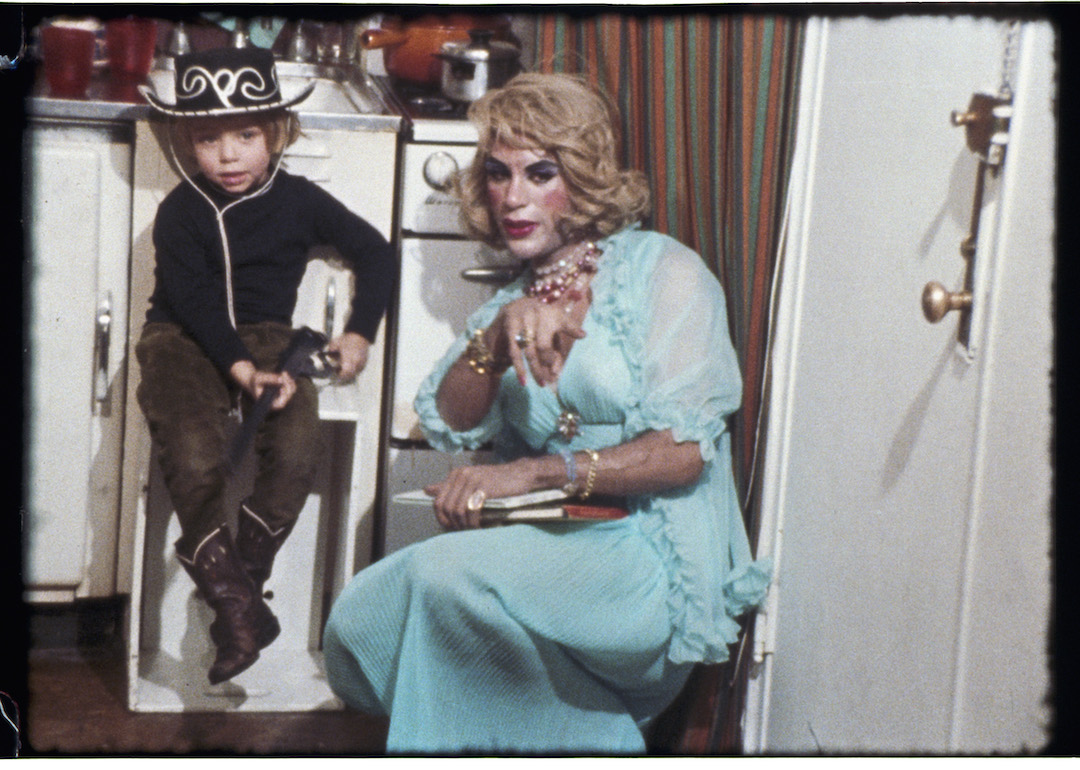
Andy Warhol (1928–1987), Ari and Mario, 1966. 16mm, color, sound; 67 mins. @ 24 fps. Pictured: Ari Boulogne and Mario Montez. © 2018 The Andy Warhol Museum, Pittsburgh, PA, a museum of Carnegie Institute. All rights reserved.

Andy Warhol—From A to B and Back Again is on view at the Whitney Museum of American Art, New York (through March 31, 2019), the San Francisco Museum of Modern Art (May 15, 2019–September 2, 2019), and the Art Institute of Chicago (October 20, 2019–January 26, 2020).

Sign up for our newsletter to get the best of VICE delivered to your inbox daily.

Follow Miss Rosen on Instagram.


from VICE https://ift.tt/2PoF7Ry

Comments

Popular posts from this blog

REPORT: Furious Spike Lee Paces Aisle, Turns Back To Stage...

REPORT: Furious Spike Lee Paces Aisle, Turns Back To Stage... (Top headline, 5th story, link ) Related stories: REVIEW: Hostless Show Starts With Rock & Rolls Off Rails... Actor knocks borders, walls during speech in Spanish... Stage designed to look like Trump hair? 'GREEN BOOK' OVERCOMES BACKLASH, NABS BEST PICTURE... Top Critics Fume... LIST: WINNERS... Advertise here from Drudge Report Feed https://ift.tt/2SUpIKy

Tiny Love Stories: ‘Who Was I to Deprive Him of Joy?’

By Unknown Author from NYT Style https://ift.tt/2UV7YAG

The Ugly History of Dual-Loyalty Charges

When Representative Ilhan Omar recently complained about “the political influence in this country that says it is okay to push for allegiance to a foreign country,” many noted accurately that she had deployed a trope—dual loyalty—that had been used against Jews for years. But this accusation has a broader history in the United States, having been used against several religious minorities—including Muslims like Omar. Indeed, many battles over religious freedom have revolved around dual-loyalty claims. [ Read: Ilhan Omar just made it harder to have a nuanced debate about Israel ] In the 19th century, many attacks on Catholics stressed that these immigrants were pawns of a foreign power. In the 1830s, Samuel Morse—then a prominent painter and later the inventor of the telegraph—urged Americans to build “walls” and “gates” to keep out Catholic immigrants, who would always be loyal to Rome. Because these Catholic immigrants were decrepit —“halt, and blind, and naked”—they were easy to co...