Facebook CEO Mark Zuckerberg announced Thursday that the social media giant is creating an “Independent Content Council” that will be empowered to make binding decisions about whether accounts are banned from the platform. The decision comes weeks after Facebook banned a number of far-right and extremists on the platform, including Milo Yiannopoulos, Alex Jones, and Louis Farrakhan.
The content council will be the long-awaited “Supreme Court” of Facebook that Zuckerberg first mentioned last year. If someone is banned from Facebook and decides to appeal the decision, it may eventually make its way to the content council, which will ultimately decide whether the account or posted content can stay on the platform.
“We know that our systems can feel opaque, and people should have a way to hold us accountable and make sure that we’re enforcing our standards fairly,” Zuckerberg said on a conference call with reporters. “This independent oversight board will look at some of our hardest casts and the decisions it makes will be binding. That means that even if our teams, or even if I disagree with its decisions, we won’t be able to overturn them.”
Zuckerberg did not give a timeline for when the council will be rolled out or who will be on it, but the idea, first floated last year, has been controversial: some experts see it as a way for Facebook to distance itself from the often politically difficult decisions it has to make about banning content. For example, if the content council decided that InfoWars’s Alex Jones could stay on the platform, Facebook can say that an independent council made the decision; if it decided to ban him, Facebook can say to conservatives that, well, an independent council made the decision.
More concerningly, Facebook hasn’t given any details about how the council will work, who will be on it, what set of rules it’ll be working under, and how decisions will ultimately filter up to it.
“Currently his conception of the independent body is more soundbite than substance,” Evelyn Douek of Harvard Law School wrote for Lawfare. “Zuckerberg’s blog post literally asks more questions about the anticipated tribunal than it answers.”
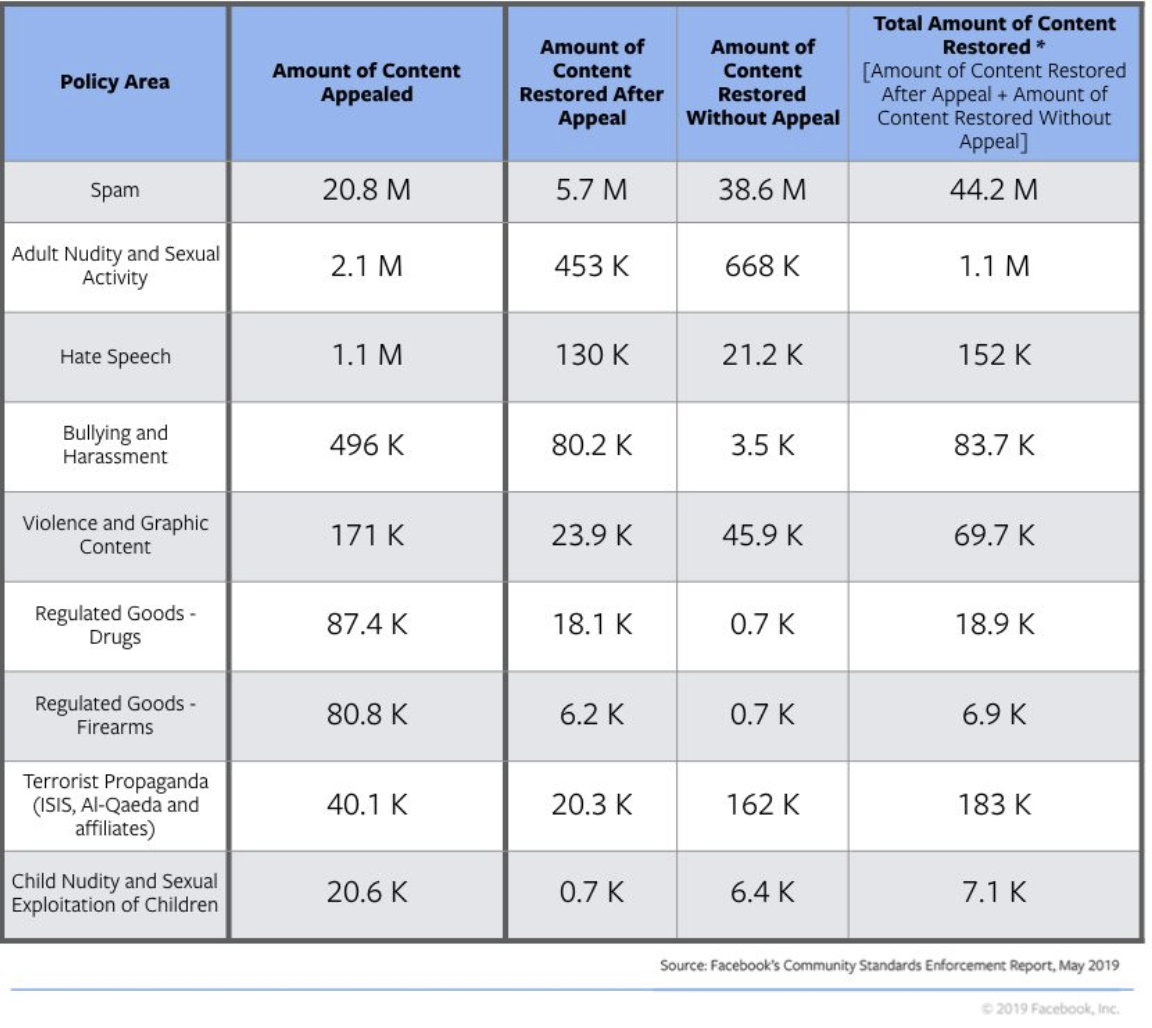
Thursday, Facebook released an update on its content moderation practices, which included a new section for appeal results. According to Facebook's data, millions of pieces of content are restored upon repeal. It stands to reason, then, that the independent content council will be used only in high profile or high stakes circumstances.
from VICE http://bit.ly/30Hm0nN
Comments
Post a Comment