Ravens get bummed out if they see a feathered friend who’s in a bad mood, according to a study published on Monday in the Proceedings of the National Academy of Sciences.
The adoption of feelings expressed by others is known as “emotional contagion,” and while it’s familiar to humans, it’s not as well understood in other social animals. Examining the phenomenon across species could shed light on the evolution of important abilities such as empathy, according to the study, which was led by Jessie Adriaense, a PhD student at the University of Vienna.
“Emotional contagion, which refers to emotional state matching between individuals, is a powerful mechanism for information sharing and, as a consequence, an increased defense against predation and the facilitation of group living,” Adriaense and her colleagues wrote in the paper.
Ravens are already well-known for their advanced cognitive skills, and are often cast as intelligent spirits in cross-cultural myths and folklore. But in addition to inspiring admiration from humans, the new study reveals that ravens are clearly in tune with each others’ feelings—especially when they are miffed.
“Our findings thus suggest negative emotional contagion in ravens, and in turn advance our understanding of the evolution of empathy,” the authors said.
To determine whether ravens were emotionally affected by the feelings of their friends, Adriaense’s team devised a multi-stage experiment.
First, eight ravens—three females and five males—cohabitated for three months at Haidlhof Research Station, located 25 miles south of Vienna. The researchers then spent three days training the ravens to distinguish between two wooden boxes, one containing a cheese treat and one that remained empty.
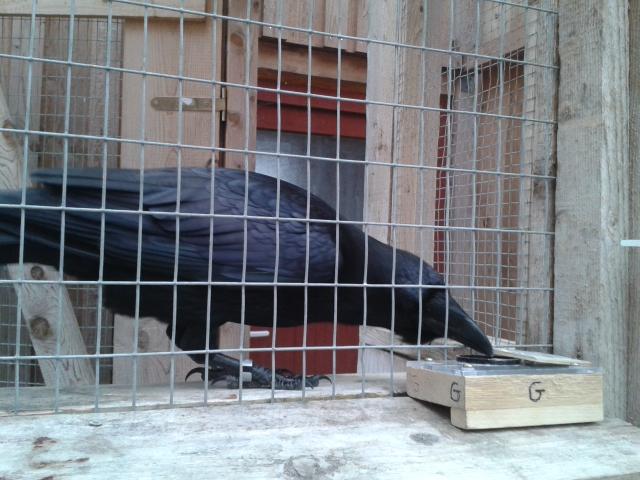
A third mystery box was introduced after these training tests to get a baseline idea of how the ravens would respond to an ambiguous prop. An optimistic response was characterized by the birds pecking at the box, while pessimism was expressed by “redirected behavior” toward the environment, such as kicking or digging, which are behaviors that may indicate frustration, the authors said.
After these trials, the ravens were paired off, with one designated as a “demonstrator” and the other as an “observer.” The demonstrator was presented with two food options: Carrots, which ravens don’t particularly enjoy, and dog food, which they do. The observer ravens were located in an adjacent compartment that allowed them to see the demonstrator, but not the food options.
Adriaense’s team then conducted a series of tests involving the withdrawal of one of the food options by the researchers. The idea was to gauge how demonstrator ravens responded to the loss of their preferred food, compared to the removal of the less favorable meal.
When the dog food remained in sight, the demonstrators expressed more positive affectations such as approaching the food with interest and closely examining it. However, if the dog food was taken away, the ravens were more likely to express negative behaviors like disinterest, scratching, and kicking.
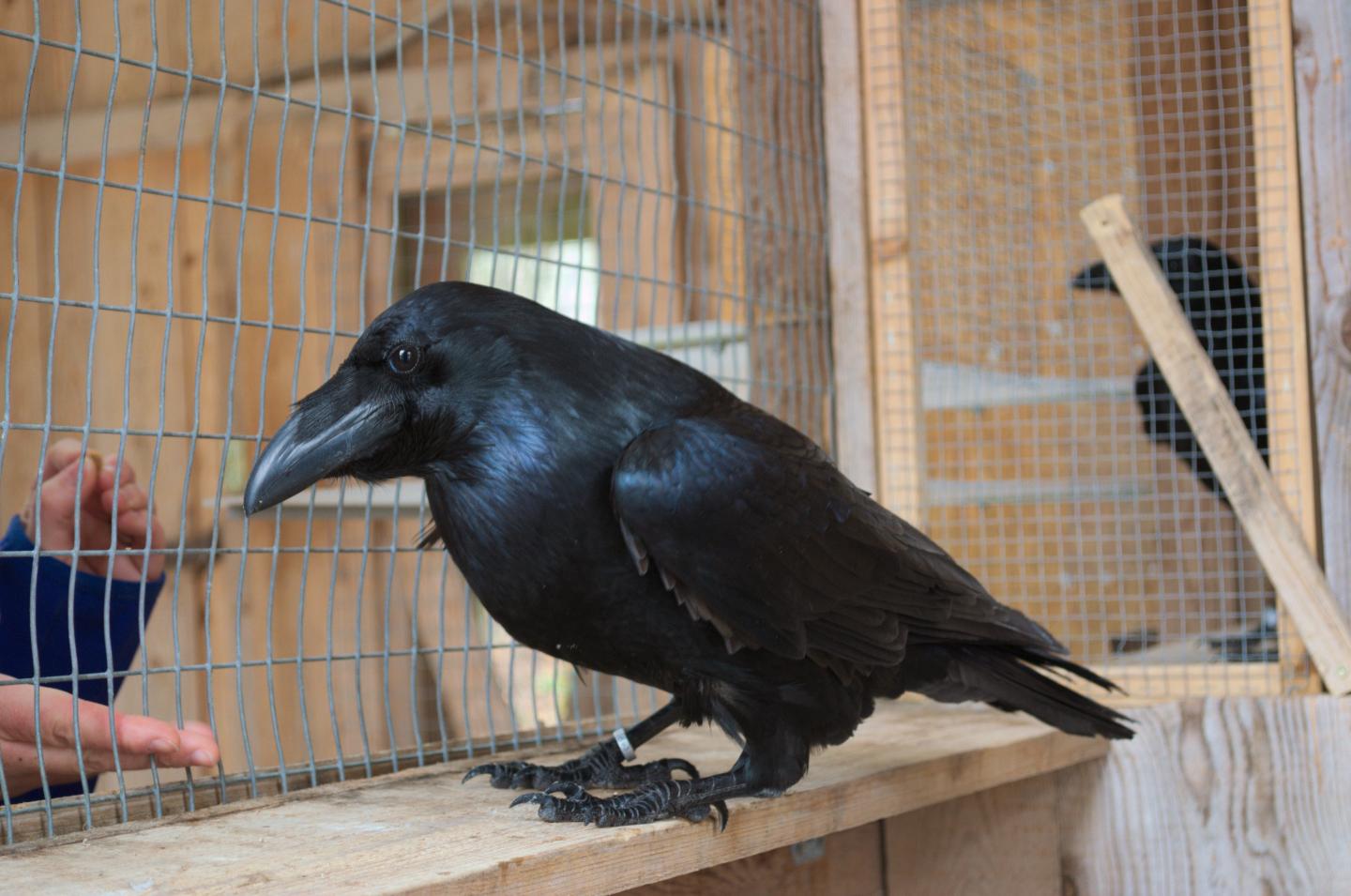
For the last phase of the experiment, the observers were placed in a separate compartment and presented with a mystery box. The ravens that had seen the negative responses of their compatriots showed less interest in the offering compared to the original box tests. In contrast, the ravens that observed a positive outcome for the demonstrators did not show much change from the previous trials.
The results not only reveal that ravens can experience emotional contagion, according to the authors, but that bad moods rub off more readily than good vibes.
“Negative emotions may be easier to experimentally induce than positive emotions, and they may be more salient in their expression than positive emotions,” the authors explained in the paper. “Moreover, animals (as well as humans) attend more to negative than positive information in their environment.”
Ravens, in a shocking twist, can be kind of a downer.
from VICE http://bit.ly/30yN60i
Comments
Post a Comment