Every weekday evening, our editors guide you through the biggest stories of the day, help you discover new ideas, and surprise you with moments of delight. Subscribe to get this delivered to your inbox.
This outbreak is the ultimate worldwide leadership test. As my colleague Uri Friedman wisely put it:
Every leader on the planet is facing the same potential threat. Every leader is reacting differently, in his or her own style. And every leader will be judged by the results.
Today, we’re examining four leaders who have been praised for their competency. All govern areas with notably low rates of infection—meaning, to varying degrees, that their effectiveness may have translated into better health outcomes for their citizens. Here’s a look at how they led.
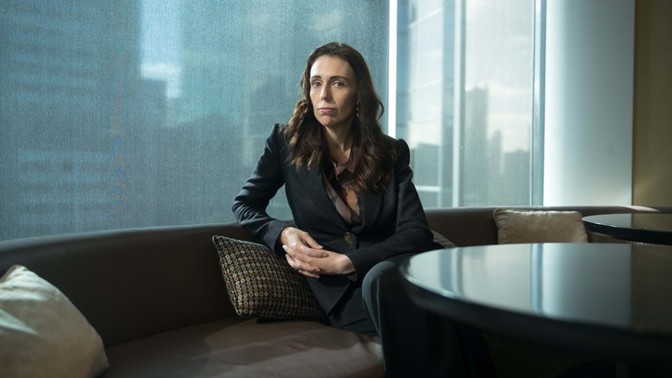
Jacinda Ardern, New Zealand’s prime minister
Ardern is an empathetic leader with a background in communication, and it shows: Her messaging has been “clear, consistent, and somehow simultaneously sobering and soothing,” Uri notes.
And she may be the most effective leader on the planet right now, he argues. With just 13 deaths so far, New Zealand is on track to eliminate its outbreak altogether.
Angela Merkel, the German chancellor
Merkel, a former research scientist who holds a doctorate in quantum chemistry, is “less a commander in chief and more a scientist in chief.”
“Germany’s leader has deployed her characteristic rationality, coupled with an uncharacteristic sentimentality, to guide the country through what has thus far been a relatively successful battle against COVID-19,” the writer Saskia Miller reports in a dispatch from Berlin.
Gavin Newsom, the governor of California
The first-term governor’s aggressive, swift response to the outbreak appears to be paying off: Though the state is under-tested, California’s curve looks far flatter than that of New York.
Todd S. Purdum writes from Los Angeles: “Newsom’s approach is also the clearest sign yet that California’s exceptionalism … may well be the new American exceptionalism.”
London Breed, the mayor of San Francisco
Days before Newsom shut down the state, Mayor Breed shut down her city. Her early action, then controversial, likely helped keep San Francisco’s numbers comparatively low.
“She did the right thing at the right time, even though it’s not what people wanted to hear,” Senator Kamala Harris, one of Breed’s political mentors, told my colleague Russell Berman.

One question, answered: Why is COVID-19 making some people sicker than others?
Some patients feel almost nothing, while others spend weeks in the ICU. A puzzling aspect of the new coronavirus is how varied people’s responses are.
At a certain point, it’s not the virus itself endangering the person. It’s their body. Jim Hamblin explains: “Once the virus has spread widely within our body, our own immune system becomes the thing that more urgently threatens to kill us.”
Once the body recognizes that it’s been overwhelmed by the virus, which can take a week or two, the immune response sometimes goes into overdrive. This process, known as a cytokine storm, seems to be what causes many coronavirus patients to crash.
Researchers are looking for patterns in who survives cytokine storms and who doesn’t—and for approaches that might help control a patient’s immune response. That work is ongoing, and we don’t have the answers yet, but we do know that a person’s immune response is not isolated from societal factors.
“Variation in immune responses between people is due to much more than age or chronic disease,” Jim writes. “People who are unable to take time off of work when sick—or who don’t have a comfortable and quiet home, or who lack access to good food and clean air—are likely to bear the burden of severe disease.”
What to read if … you just want practical advice:
Tonight’s Atlantic-approved quarantine activity:
Grab a pen, a quill—whatever’s close. It’s the third week of the #AtlanticPoetryChallenge. Our latest prompt may require some introspection: Write a poem for your future self.
View all of our stories related to the coronavirus outbreak here. Let us know if you have specific questions about the virus—or if you have a personal experience you’d like to share with us.
This email was written by Caroline Mimbs Nyce, with help from Isabel Fattal, and edited by Shan Wang.
Did someone forward you this newsletter? Sign yourself up for The Daily here.

from The Atlantic https://ift.tt/2KoBExA
Comments
Post a Comment