Every weekday evening, our editors guide you through the biggest stories of the day, help you discover new ideas, and surprise you with moments of delight. Subscribe to get this delivered to your inbox.
As you process the events of this past week, these perspectives from our writers might be helpful.
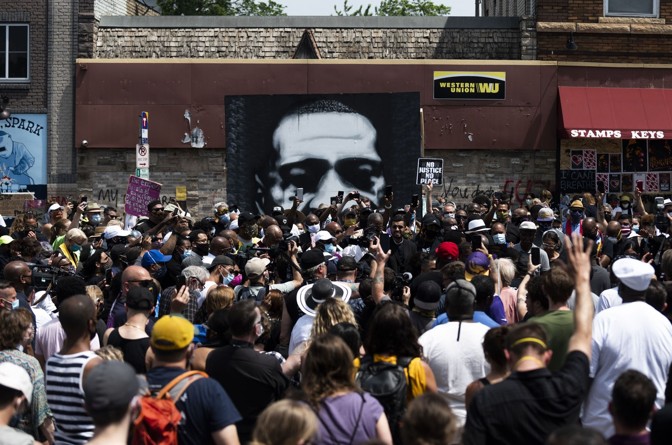
This week, demonstrators across the country gathered, in the midst of a pandemic, to protest the killing of George Floyd and police violence against black Americans. This week, federal police used tear gas on peaceful protesters in order to clear an area for President Donald Trump’s photo op. This week, many Americans were jolted into conversations about racism and policing—though for many black families, this week feels like history repeating itself.
And now this week is nearing its end. Our writers reflect on the continuing protests and where the country goes from here:
Demonstrators may just be shouting into an institutional void.
“The protesters aren’t speaking to leaders who might listen, or to a power structure that might yield, except perhaps the structure of white power, which is too vast and diffuse to respond,” George Packer argues. “A responsible establishment doesn’t exist.”
Senior Republican leadership has remained largely silent.
A few senior American military figures—including President Trump’s former defense secretary, James Mattis—have spoken out against the president. In our latest cover story, Anne Applebaum explores why some people speak out, and why others don’t. “What would it take for Republican senators to admit to themselves that Trump’s loyalty cult is destroying the country they claim to love?”
The country needs to rethink its priorities for the criminal-justice system.
The rallying cry Defund the police “is in one sense a last-resort policy,” Annie Lowrey writes. “But it is also and more urgently a statement of first principles: The country needs to shift financing away from surveillance and punishment, and toward fostering equitable, healthy, and safe communities.”
The aggressive policing of protests will worsen the pandemic.
“People cannot avoid touching their face when they have tear gas in their eyes. People cannot wash their hands in handcuffs,” James Hamblin writes. “People cannot be expected to listen to crucial health directives now, or the next time a public-health crisis arrives, from leaders who themselves refuse to listen.”
Corporate America has nothing real to say about racism.
“These brands set themselves outside the systems they serve,” Amanda Mull writes, “marveling at the country’s racism as though it’s an invisible pathogen for which no one is responsible, and therefore one that no one can meaningfully address.”
(CELINA PEREIRA)
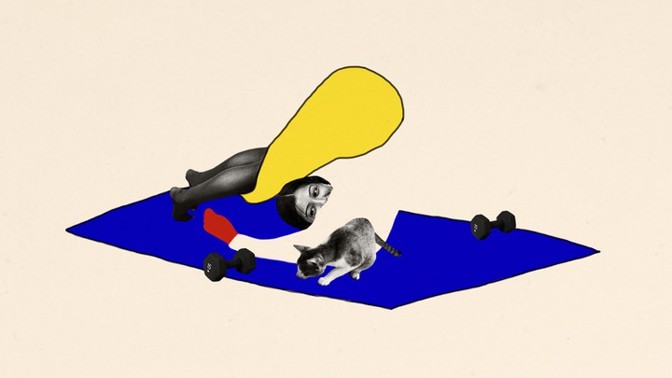
One question, answered: Are gyms as we knew them before the pandemic gone forever?
Michael Owen, our deputy editor and a self-identified “person who exercises a lot,” imagines the gyms of the future as cleaner, quieter, and less crowded spaces than they once were. But in that transformed state, they may also lose the very thing that defined them, he argues.
“Fitness can happen anywhere, in any form, anytime,” Michael writes. Gyms aren’t just places you work out; they’re “where you go when you want to be with people who can help you get stronger, and who have the best tools to do it.”
View all of our stories related to the coronavirus outbreak. We’re looking to talk with individuals who got sick with COVID-19 and didn’t tell their family about it. To share your experience, please write to us.
What to read if … you just want practical advice:
What to read if … you’re struggling to make sense of time:
In a pandemic, “the understanding of time is lost,” the artist Ai Weiwei writes. “A potted cactus, a piano, a bright table lamp, a microwave oven—all things familiar to us turn unfamiliar. Some become more important; others lose the ties to our inner life they once had.”
1-Down, four letters: Palenque people
Try your hand at our daily mini crossword (available on our site here), which gets more challenging through the week.
→ Challenge your friends, or try to beat your own solving time.
This email was written by Isabel Fattal and Annika Neklason, and edited by Shan Wang. Questions, suggestions, typos? Reply directly to this newsletter or write to caroline@theatlantic.com anytime.
Did someone forward you this newsletter? Sign yourself up for The Daily here.
- Why the Coronavirus Has Been So Successful
- Red and Blue America Aren’t Experiencing the Same Pandemic
- This Is Not a Recession. It’s an Ice Age.
- The Trump Presidency Is Over
- Donald Trump’s Cult of Personality Did This

from The Atlantic https://ift.tt/3eXX95M
Comments
Post a Comment