Every weekday evening, our editors guide you through the biggest stories of the day, help you discover new ideas, and surprise you with moments of delight. Subscribe to get this delivered to your inbox.
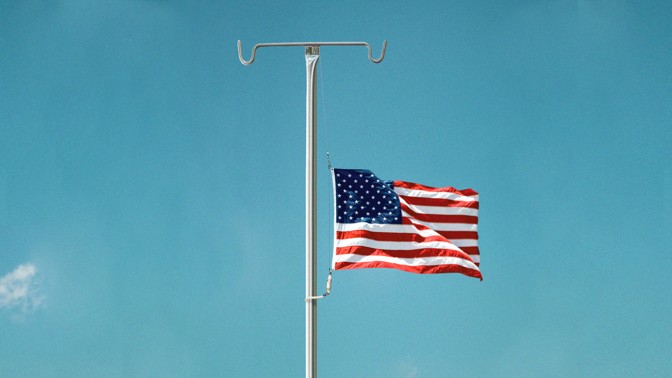
This is an awkward moment to be celebrating America. The past few months showed a great power in decay, struggling to contain a deadly pandemic and reckoning anew with its racist systems.
As such, many Americans may hesitate to drape themselves in red, white, and blue. Still more will be prevented from gathering. This year finds fireworks shows that are socially distant, or canceled altogether.
On the eve of the holiday, here’s an essay worth revisiting: Resistance, Ibram X. Kendi argued last year, is not incompatible with patriotism.
We should be celebrating our disobedience, turbulence, insolence, and discontent about inequities and injustices in all forms. We should be celebrating our form of patriotism that they call unpatriotic, our historic struggle to extend power and freedom to every single American. This is our American project.
Feeling patriotic?
Kick off your Fourth with a rereading of Julia Ward Howe's “The Battle Hymn of the Republic,” first published in The Atlantic in 1862.
Feeling wary of celebration?
The American revolution wasn’t only an effort to establish independence from the British—it was also a push to preserve slavery and suppress Native American resistance. A history professor looks deeply at the lesser-known closing sentence of the Declaration of Independence—words that speak to hard truths about America’s founding.
Feeling like you want some poetry?
Spend time with two poets whose works were inspired by the potential of a younger America. Walt Whitman’s verses on democracy and Langston Hughes’s “I, Too” complement each other.
Feeling like history has its eyes on you?
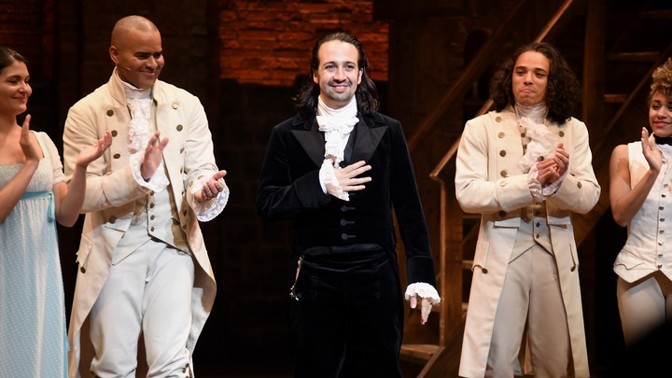
Step-kick your way to the couch for the Disney+ edition of the musical Hamilton. To say that much has changed in the country since the hit first opened in 2015 would be an understatement.
“Hamilton’s brassy celebration of the founding of America’s governmental institutions plays in a different light in 2020,” our film critic David Sims writes. “But the show is not irrelevant … It now also functions as a reminder that the country’s history and future is still being written and rewritten.”
Feeling ready to party … but wondering how to do so safely?
We know you miss live music. Revisit our playlist specifically designed for partying alone—there’s no shame in busting a move in your bedroom.
Absence makes the heart grow fonder when it comes to pools too. But even if your local swimming hole is open, keeping a six-foot distance from everyone in and out of the water would be a tricky task on a normal day, let alone a holiday. For a safer splash, try a sprinkler.
Want more guidance? Here’s how to think through the risks of various summer activities.
Feeling like fireworks in the sky—and the Fourth in general—are played out?
Try this long read about skydiving worms. Each week, the U.S. Department of Agriculture drops nearly 15 million flesh-eating worms along the Panama-Colombia border. The health of a continent is at stake.
Thanks for reading. This email was written by Caroline Mimbs Nyce and Haley Weiss, and edited by Shan Wang. Did someone forward you this newsletter? Sign up here.

from The Atlantic https://ift.tt/2YWXKPN
Comments
Post a Comment