Every weekday evening, our editors guide you through the biggest stories of the day, help you discover new ideas, and surprise you with moments of delight. Subscribe to get this delivered to your inbox.
A pro-Trump caravan clashed with counterprotesters in Portland, Oregon. One man, purportedly affiliated with a far-right group, died. One of our writers warns that such violence speaks to something troubling about the state of democracy.
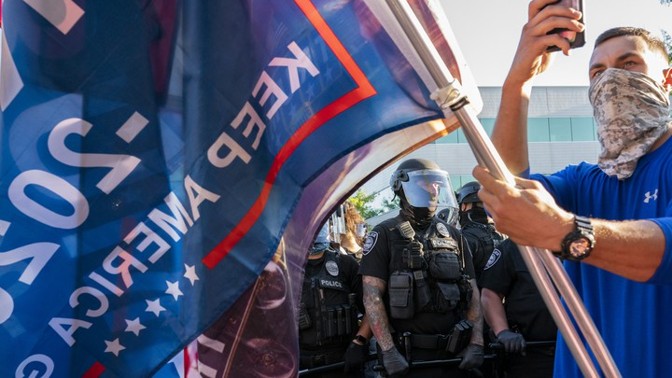
The American democratic system depends on the ability to disagree peacefully. Today, that premise is under threat, our staff writer Franklin Foer warns—and the threat is coming from the White House.
“When a society discards politics, violence assumes its place,” Frank writes, citing the deaths of two protesters in Kenosha, Wisconsin, and that of the man in Portland. Donald Trump is not alone in his turn away from politics, Frank argues: He merely accelerated what the Republican Party has been flirting with since the Newt Gingrich era.
Last year, our Ideas editor Yoni Applebaum argued that a party in dire electoral straits might turn to undemocratic tactics to maintain its power. And that could be how America ends, he warned.

What to read if … you’re still processing the death of Chadwick Boseman:
The Black Panther actor died at 43, after a four-year battle with colon cancer. Boseman’s legacy, David Sims observes, “will be the incredible body of work he created” in the seven short years following his breakout role as Jackie Robinson in 42.
“Amid a moment in which Black life feels particularly fragile, losing a Black superhero, even a fictional one, is especially destabilizing,” Clint Smith writes.
One question, answered: Contract tracing is working internationally. Why not in America?
“Contact tracers are not to blame,” Olga Khazan reports. “But they’re struggling for three main reasons.”
The first is that there are too many cases to track:
The countries where contact tracing has worked best set up their tracing systems before cases exploded, and as cases grew, they hired more tracers. The U.S. has not done this. In June, when states were in the throes of reopening, only seven states and Washington, D.C., met the Centers for Disease Control and Prevention’s recommendation of 30 contact tracers per 100,000 residents, according to an NPR analysis.
For the other two reasons, read the rest of Olga’s report.
What to read if … you’d like to better understand the coronavirus:
Here are four key reads from our team:
What to read if … you’re missing the pageantry of back-to-school season:
Missing out on fall traditions—even the stressful ones—can make uncertain times harder to bear for kids and grown-ups alike, Jenny Anderson reports.
Dear Therapist
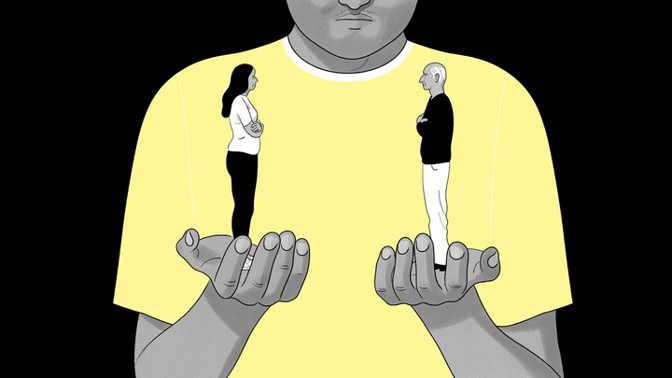
Every Monday, Lori Gottlieb answers questions from readers about their problems, big and small. This week she advises an anonymous reader who says his parents aren’t getting along:
Recently, my father confided in me—an act that I see as monumental—that after a particularly heated fight, he realized he was reaching a breaking point. He said he has been thinking of divorce, unless something can change. He is open to marriage counseling, but he knows that persuading my mother to attend is an uphill battle. I know that he came to me because he thinks I might be the only one in our family who can convince her.
Read the rest, and Lori’s response. Write to her anytime at dear.therapist@theatlantic.com.
Did someone forward you this newsletter? Sign up here.

from The Atlantic https://ift.tt/3gLgDLh
Comments
Post a Comment