Every weekday evening, our editors guide you through the biggest stories of the day, help you discover new ideas, and surprise you with moments of delight. Subscribe to get this delivered to your inbox.
The past few weeks have brought an almost unfathomable surge of news.
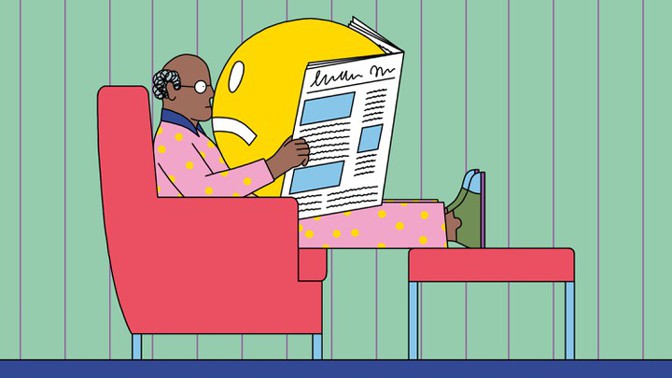
Although it’s important to stay abreast of the very real, and very serious, threats to our democracy, our happiness columnist, Arthur C. Brooks, warns against gorging on all things political from now until the election.
“For quality of life’s sake—yours and others’—you would do well to put boundaries around the time and emotional energy you devote to politics this fall,” he writes.
To that end, you’ll find a collection of nonpolitical Atlantic stories. We hope they offer you a brief respite from the news cycle.
1. What does it really mean to “free” Britney Spears?
Our Culture writer Spencer Kornhaber takes a pop-princess-filled look at the complexities of sexism and fame, and the meaning of liberation.
2. The pandemic has made almost every relationship long-distance—and that’s a good thing.
The current crisis, Eva Hagberg argues, “offers an opportunity to decouple good relationships from physical intimacy and to open up other ways for friendships to flourish.”
3. A journalist became a poker champion in just one year.
Maria Konnikova was a psychologist and writer who knew almost nothing about the card game. Then she trained with one of the world’s best players.
Rebecca Giggs explores how we know—and how we learn—what to fear.
5. A woman once smuggled her boyfriend out of prison in a dog crate.
Sometimes people ask Toby Dorr if she regrets what she did. She always says regrets are a waste of time.
6. For the fiction lover: Nicole Krauss’s new short story considers manhood through the eyes of a woman.
It begins: “My boys are standing at the edge of the jetty, and either they will jump or they won’t jump.”
7. A fake baby is born. Here’s how—and why.
For years, women on the internet have been writing conspiracy theories about celebrity pregnancies, Kaitlyn Tiffany reported as part of our “Shadowland” project. What sparks them?
Watch
I asked our critic David Sims to pick a few movies worth streaming online this weekend. He chose these five:
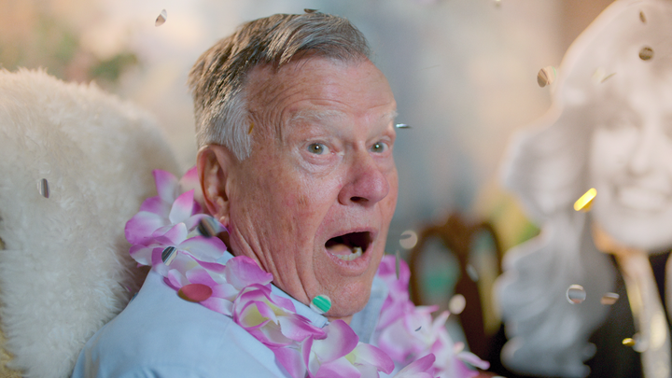
1. Dick Johnson Is Dead (Netflix)
This documentary is “a strangely satisfying, yet bittersweet watch in this dark time,” David writes.
2. I’m Thinking of Ending Things (Netflix)
“There’s a weird thrill to getting lost inside this movie, only so you can study every odd detail from new angles, over and over again,” says David.
3. Bill & Ted Face the Music (rent online)
The movie “is very funny, and very sweet, and yes, I may have even cried a little at the end,” the writer Devin Gordon confessed.
4. Boys State (Apple TV)
This documentary about teenagers running a government simulation in Texas is “both inspiring and occasionally terrifying,” David warns.
5. The 40-Year-Old Version (Netflix)
David calls it “an easygoing, charming work, buoyed by [Radha] Blank’s excellent lead performance and suffused with snappy jokes and sparkling supporting turns.”
Did someone forward you this newsletter? Sign up here. Need help? Contact Customer Care.

from The Atlantic https://ift.tt/3dfoYa3
Comments
Post a Comment